

Video content has taken over our feeds. From short-form skits on TikTok to filmed podcasts on Spotify, it’s nearly impossible to go a day without watching at least one. However, the power of video is the most prevalent on YouTube.
YouTube is the second-largest social media platform, with more than 2 billion active users. While you may be used to using it as a way to learn how to fix a sink or watch old comedy clips, it can also be used as a digital marketing tool for your healthcare brand.
Not only can you use YouTube as a way to spread brand visibility and awareness for patient acquisition, but it’s also a way to spread patient education and establish thought leadership to boost your credibility.
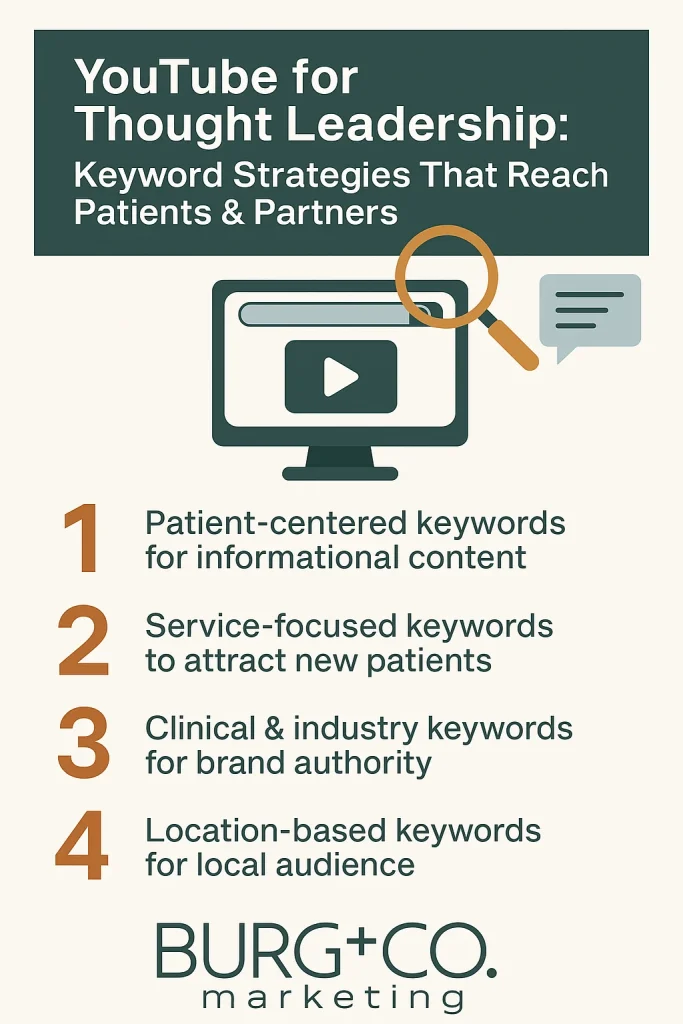
If you’re trying to incorporate YouTube into your digital marketing strategy, the importance of keywords can’t be overlooked. By using targeted keywords throughout your title, description and tags, you can increase visibility with both patients and partners.
Read on to learn why, as a provider, you should use YouTube and what to know about keyword research. You’ll also learn how keywords can help you create thought leadership content.
Why YouTube matters for healthcare providers
More than half of U.S. adults turn to the internet for medical information. It can help them determine if there’s a concern that needs attention and provide them with a starting point for their next steps, such as finding a provider.
Every distribution channel has its perks for digital marketing. YouTube allows you to provide in-depth content with full-length videos, which is especially important for things like health education. The platform can be a hub for health information, helping patients boost their advocacy on their wellness journey while also giving you a way to connect them with your services.
YouTube provides opportunities for you to position yourself as a trusted expert by providing thorough, data-backed information that’s given in an easy-to-understand way.
Understanding YouTube keywords
Keywords are at the heart of digital marketing efforts. Including relevant keywords throughout your content enables you to target qualified leads and rank high on search engine results pages.
YouTube keywords, in particular, refers to what a user types into the search bar on the platform. By learning about what they’re typing, you can gain a better idea of how to connect videos to what patients and partners are searching for.
For those who are used to focusing on keywords as part of a search engine optimization (SEO) strategy: Targeting keywords for YouTube-specific SEO is a bit different.
General SEO is about figuring out what kind of text-based content the algorithm believes aligns best with what the user is looking for in their search, such as blog articles and landing pages with specific keywords. On the other hand, YouTube SEO is determining the video content that will work best with their searches by implementing keywords into the titles, descriptions, tags and transcripts.
The power of YouTube keyword research
For YouTube, keyword research allows you to figure out what types of medical concerns people are turning to long-form videos for so that you can relate back to your brand. It also means seeing what competitors are doing and what has slipped through the cracks that you can jump on.
You can carry out thorough keyword research for YouTube using a variety of different tools and approaches, including:
- YouTube search bar (see what pops up for specific keywords, such as “chronic pain”)
- Google Trends
- TubeBuddy
- VidIQ
These provide practical, low-cost ways to get started with keyword research for YouTube. Depending on how much you plan to post on the platform, you can ramp up your keyword research budget if needed.
How to find the best search keywords per topic on YouTube
Every topic will bring up a plethora of search keywords in the YouTube search bar. If you’re trying to determine which ones are worth basing videos off of, here are a few steps to follow:
- Start off broad.
Go to the YouTube search bar and type in a broad healthcare topic that’s linked to your specialized health field (e.g., mental health treatment or preventive care).
- Use autocomplete.
See what keyword recommendations are autocompleted from your broad topic, and use those as a foundation for a video. You may also see related topics in the list that could spark inspiration, like “mental health treatment and self-care tips.”
- Analyze competition.
Take a look at the competitors in your field and see if they’ve made videos based on keywords that you can put your own angle on. You can also take a look at the trending videos to see what topics are gaining traction at the moment.
- Find long-tail keywords.
A keyword that’s three words or longer is called a long-tail keyword. Take a look at what long-tail keywords patients are actually searching for so that you can target a niche video that attracts quality leads who are actively looking for the information.
While you’re carrying out your keyword research, keep in mind that people typically aren’t using medical jargon in their searches, such as specific medication names or the full diagnosis name. The keywords will include patient-friendly language that’s easy to understand.
Creating thought leadership content with keywords
Thought leadership means positioning yourself as an authority in a field that people can put their trust in, even if they haven’t booked an appointment with you. Establishing thought leadership can lend credibility and expert insight to your videos, and YouTube content can help you achieve that goal.
You can align your keyword choices with your content strategy so that you’re making videos based on topics that are actually being searched, while also being relevant to your expertise. However, it’s important to balance patient education with provider expertise.
You can use videos as a tool to increase the person’s knowledge and awareness of a concern, but it shouldn’t be something that would be included in medical school. Try to avoid medical jargon or hard-to-pronounce terms, instead using a conversational tone and interesting visuals.
Consistent use of keywords in video content also helps to build visibility and trust in both providers and patients.
BURG+CO. can help you learn how to incorporate YouTube keywords into your marketing strategy
People turn to YouTube to learn about everything from the newest movie releases to the history of submarines. As a healthcare provider, you can lean into people’s desire to learn from videos by incorporating YouTube into your content marketing. If you’re not sure what that looks like, or how to go about keyword research, BURG+CO. can help.
By combining our knowledge of keywords from SEO with the engaging format of YouTube, we can guide you through how to create YouTube content that gets you the clicks and conversions you need to grow. We’ll collaborate with your team of experts, as well as our own social media partners, to help you incorporate the video platform into your digital marketing strategy.
Our team has years of experience in helping healthcare brands improve their digital presence to attract new patients and retain existing ones. If you’re looking to perform better in search engine results and attract more potential patients to your site, we’re ready to talk to you to see how we can help.
Want expert support with your digital marketing? Connect with BURG+CO. today to explore how we can help your healthcare brand grow.