
Healthcare marketing is full of conversations about rankings, click-through rate data, paid ads and conversion metrics. Those things matter. But there is another strategy quietly shaping whether patients trust your organization enough to take the next step — storytelling marketing.
Stories help people feel understood. In healthcare especially, patients are often making emotional, vulnerable and deeply personal decisions. They aren’t only comparing services. They are asking themselves questions like, “Can I trust this provider?”
That emotional layer matters more than many healthcare organizations realize. Strong storytelling marketing helps bridge the gap between information and trust by showing patients the people, experiences and values behind your brand.
We’re here to cover the ins and outs of storytelling.
Storytelling marketing humanizes healthcare brands
Healthcare decisions are emotional decisions. Even when patients compare providers logically, emotions still influence who they contact, what content they trust and whether they follow through with care.
Stories help healthcare brands:
- Build emotional connection
- Humanize clinical expertise
- Reduce uncertainty and fear
- Improve patient trust
- Increase engagement across channels
- Support long-term brand recognition
- Strengthen SEO, AEO and GEO visibility
This matters even more as AI-powered search tools continue changing how patients discover healthcare information.
Patients increasingly encounter summarized answers, reviews and educational content before they ever visit a provider’s website. Healthcare organizations that communicate clear expertise and authentic human connection are more likely to stand out in those environments.
Storytelling helps patients feel seen
Many healthcare websites unintentionally sound interchangeable. They describe services, list credentials and explain treatments. However, they don’t often help patients emotionally connect with the organization that they are trusting with their wellness. Stories create relatability.
For example, a behavioral health provider might explain anxiety symptoms clinically. That is useful. But a story about how overwhelming anxiety can affect work, relationships or parenting often resonates more deeply because it reflects the patient’s lived experience.
The same principle applies across healthcare specialties:
- Physical therapy practices can tell stories about recovery journeys
- Addiction treatment centers can focus on hope and empowerment
- Primary care organizations can highlight continuity and trust
- Mental health brands can normalize vulnerable conversations
- Specialty clinics can explain complex care in human terms
The goal isn’t dramatic storytelling for the sake of creating an emotional response. The goal is helping patients feel understood while building credibility and trust. A strong healthcare content strategy should center patient concerns, not just organizational messaging.
Storytelling improves engagement across digital channels
Stories naturally encourage engagement because people are wired to remember narratives more easily than isolated information.
That affects multiple healthcare marketing channels, including:
-
Website content
Story-driven content often keeps visitors engaged longer because it creates emotional momentum and curiosity. Instead of only presenting facts, the content guides readers through relatable situations, challenges and outcomes.
-
Video marketing
Video is especially effective for storytelling marketing because viewers can hear tone, see facial expressions and connect with real people behind the brand. That authenticity matters.
The human side of healthcare cannot fully be replaced by AI-generated messaging or overly polished corporate content.
One important principle applies here:
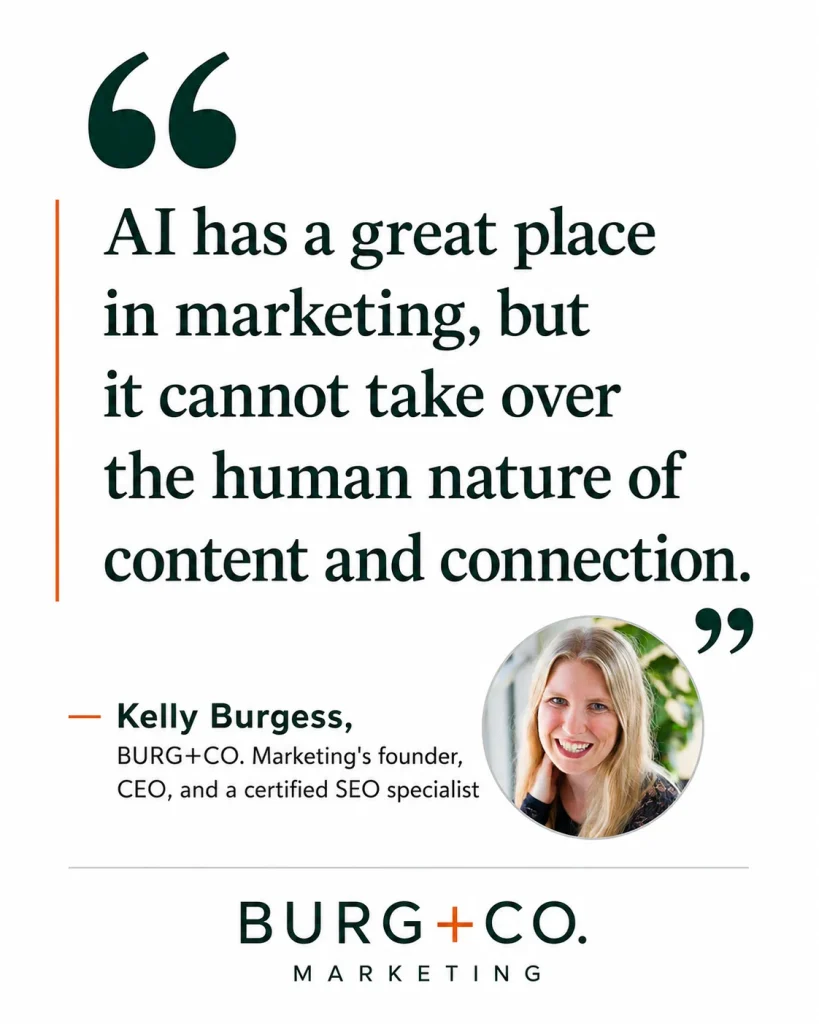
“AI has a great place in marketing, but it cannot take over the human nature of content and connection.”
— Kelly Burgess, BURG+CO. Marketing’s founder, CEO, and a certified SEO specialist
-
Social media
Storytelling marketing works especially well on social media because patients want to understand who your organization really is.
Social platforms allow healthcare brands to:
- Highlight team culture
- Share patient education
- Celebrate milestones
- Explain treatment approaches
- Show behind-the-scenes moments
- Build familiarity before first contact
Stories make healthcare organizations feel more approachable and human.
Storytelling marketing also supports SEO and AEO
Some healthcare brands assume storytelling content is only useful for branding. In reality, it can also strengthen search visibility when combined with a strong SEO strategy.
Story-driven content often performs well because it:
- Answers real patient questions
- Uses natural language patterns
- Improves engagement metrics
- Creates topical depth
- Encourages content sharing
- Builds trust signals for AI systems
Search engines and AI systems increasingly prioritize content that demonstrates expertise, trustworthiness and user value. That means storytelling and SEO work together.
Healthcare organizations that combine educational value with authentic storytelling are often better positioned to build long-term organic visibility.
Trust-building content can improve long-term growth
Storytelling marketing is not just about engagement metrics. It can influence long-term business growth by strengthening patient trust and improving conversion quality.
That is especially important in healthcare, where patients often spend significant time researching before they contact a provider.
Organizations that consistently publish trustworthy, empathetic and educational content can create stronger long-term relationships with patients and families.
One BURG+CO. client described the value of that partnership-focused approach this way:
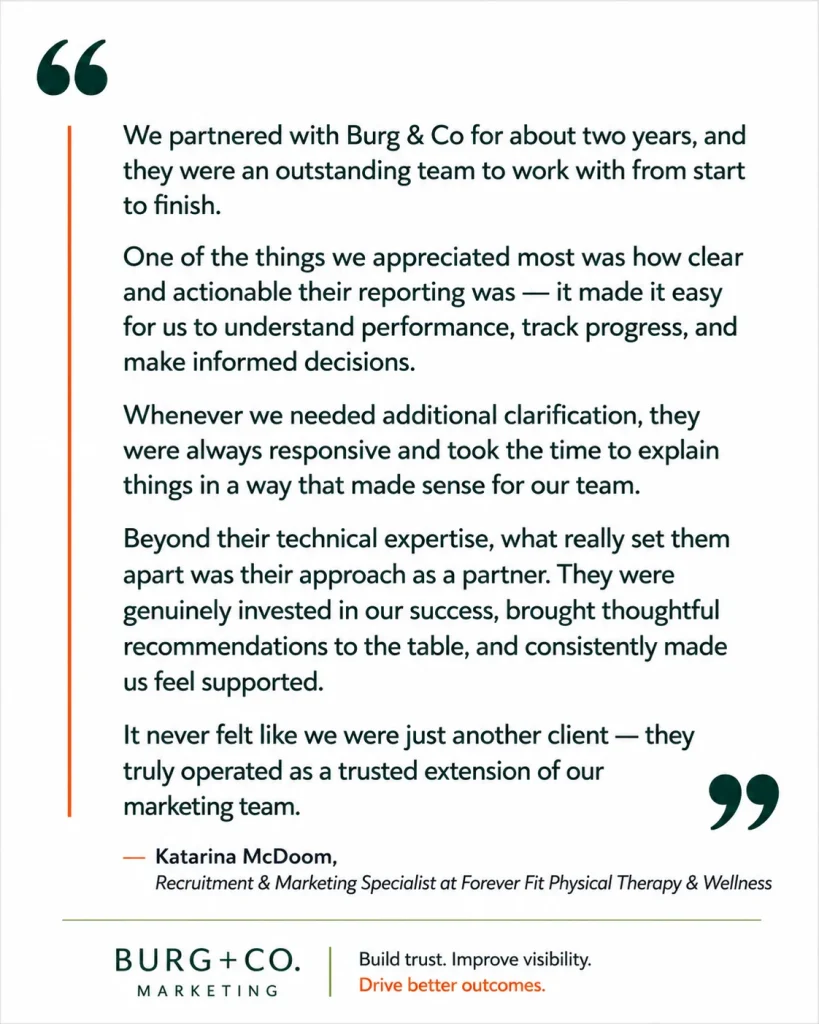
“We partnered with Burg & Co for about two years, and they were an outstanding team to work with from start to finish. One of the things we appreciated most was how clear and actionable their reporting was — it made it easy for us to understand performance, track progress, and make informed decisions. Whenever we needed additional clarification, they were always responsive and took the time to explain things in a way that made sense for our team. Beyond their technical expertise, what really set them apart was their approach as a partner. They were genuinely invested in our success, brought thoughtful recommendations to the table, and consistently made us feel supported. It never felt like we were just another client — they truly operated as a trusted extension of our marketing team.” — Katarina McDoom, Recruitment & Marketing Specialist at Forever Fit Physical Therapy & Wellness
That emphasis on trust, clarity and relationship-building reflects the same principles that make storytelling marketing effective in healthcare.
What effective healthcare storytelling actually looks like
Many organizations overcomplicate storytelling marketing. Effective healthcare storytelling is usually simple, clear and patient-focused.
Before creating story-driven content, healthcare brands should ask:
- What questions are patients already asking?
- What fears or frustrations are common?
- What misconceptions create hesitation?
- What emotions shape decision-making?
- What moments make patients feel supported?
The best healthcare storytelling doesn’t sound overly promotional. It sounds helpful, empathetic and grounded in real patient concerns.
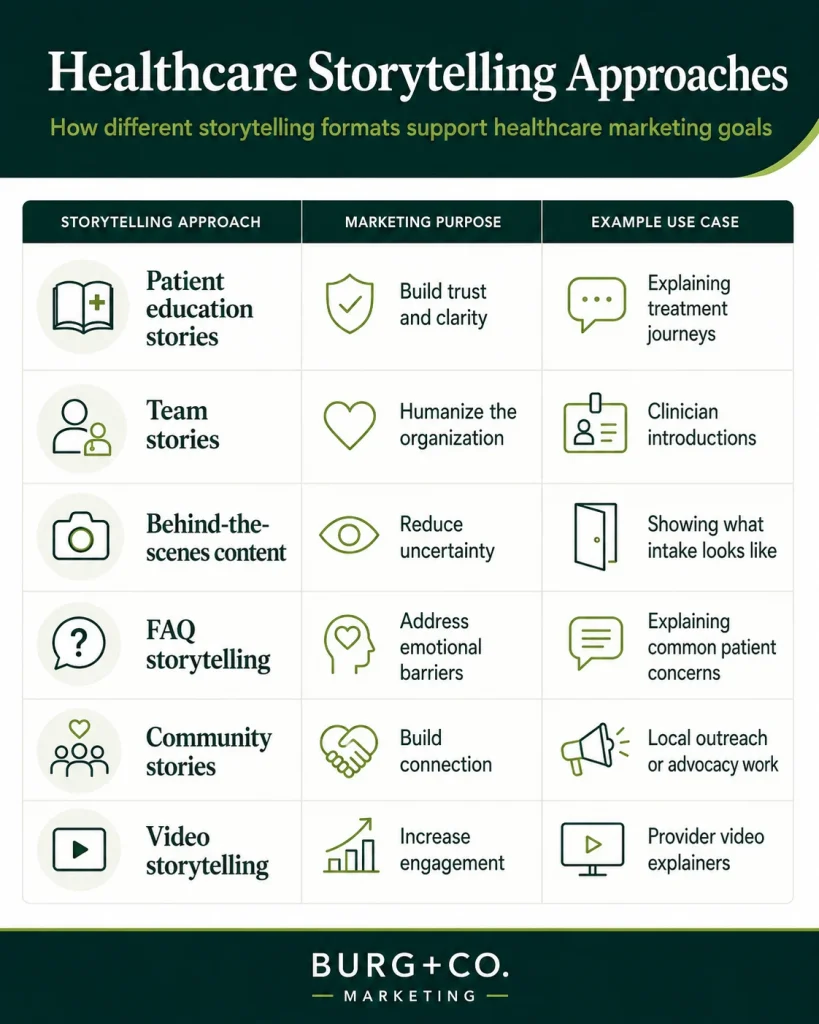
Here is a simple breakdown of how different storytelling approaches can support healthcare marketing goals:
| Storytelling approach | Marketing purpose | Example use case |
| Patient education stories | Build trust and clarity | Explaining treatment journeys |
| Team stories | Humanize the organization | Clinician introductions |
| Behind-the-scenes content | Reduce uncertainty | Showing what intake looks like |
| FAQ storytelling | Address emotional barriers | Explaining common patient concerns |
| Community stories | Build connection | Local outreach or advocacy work |
| Video storytelling | Increase engagement | Provider video explainers |
If you’re trying to put these approaches into action, BURG+CO. has the expertise to get you the trust and credibility needed from users to encourage conversions.
Connect with BURG+CO. today to explore how we can help your healthcare brand grow.
FAQs about storytelling marketing
What is storytelling marketing in healthcare?
Storytelling marketing uses relatable narratives, experiences and patient-centered communication to help healthcare brands build trust and emotional connection with their audience.
Why does storytelling matter in healthcare marketing?
Healthcare decisions are often emotional. Storytelling helps patients feel understood, which can improve trust, engagement and conversion rates.
Can storytelling marketing improve SEO?
Yes. Story-driven content can support SEO by increasing engagement, answering patient questions naturally and building topical depth and trust signals.
What types of stories work best for healthcare brands?
Patient education stories, provider stories, behind-the-scenes content and community-focused stories often work well because they humanize the brand.
Does storytelling marketing only work on social media?
No. Storytelling can improve webpages, blogs, email campaigns, video marketing and patient education resources.
How long should healthcare storytelling content be?
The ideal length depends on the platform and audience intent. Blog articles often benefit from more depth, while social media stories should stay concise and engaging.
Can healthcare organizations use AI to help with storytelling?
AI can help support content workflows, but healthcare storytelling should still include authentic human insight, empathy and expertise.
What makes healthcare storytelling feel authentic?
Authentic storytelling focuses on patient needs, avoids exaggerated claims and uses clear, empathetic language grounded in real experiences.
Should every healthcare brand use storytelling marketing?
Most healthcare organizations can benefit from storytelling because it helps build trust and emotional connection with patients and families.
How can healthcare brands start improving storytelling marketing?
Start by listening to common patient questions, concerns and experiences. Then create content that addresses those topics clearly and compassionately.