
Social marketing and social media can feel like one more thing your healthcare brand is “supposed” to be doing. Post more. Be authentic. Hop on the trend before the trend is over. It can be a lot. The better question isn’t whether your organization should be on social media. It’s how social media fits into a larger healthcare marketing strategy that builds trust, supports patient education and helps people understand whether your brand may be the right fit for their needs.
Social media isn’t a magic patient-acquisition machine. For healthcare providers, it works best as a visibility, education and relationship-building channel. It gives patients, families, referral partners and community members a clearer sense of who you are before they ever fill out a form, call your office or walk through your doors.
That matters because healthcare decisions are personal. People are often comparing options while managing symptoms, stress, insurance questions, privacy concerns, family input and a very real desire to feel understood and helped. Your social media presence should help them feel more informed, not more pressured.
We’re here to give you the rundown of social media marketing and how to use it for a healthcare practice.
What do we mean by social marketing and social media?
Social media is the set of platforms your organization uses to publish and engage online. That may include Facebook, Instagram, LinkedIn, YouTube, TikTok or other channels that make sense for your audience.
Social marketing is the strategy behind that activity. It asks questions like:
- Who are we trying to reach?
- What do they need to understand before they take the next step?
- What message supports trust without making unsupported claims?
- Which platform fits the content and audience?
- How should social content connect with SEO, website content and conversion paths?
Why social media matters for healthcare brands
Healthcare brands aren’t just competing for attention. They’re trying to earn trust in moments where people may feel uncertain, vulnerable or overwhelmed.
A thoughtful social media strategy can help healthcare providers:
- Show the people behind the organization
- Explain services in plain language
- Answer common patient questions
- Share community involvement
- Reinforce brand voice across channels
- Support content distribution beyond the website
- Build familiarity before someone is ready to contact the practice
The key is to use social media as part of a full digital ecosystem. A post may introduce a topic. A blog may explain it in more depth. A service page may help someone understand the next step. A website form or call button may help them act when they’re ready. Each piece should have a job.
Social media should build trust before it asks for action
For healthcare providers, trust is the real currency. Social content should help people understand your values, your expertise and the experience they can expect when engaging with your brand.
A strong social media presence may include:
- Educational posts — Simple explanations of common questions, service areas or care pathways
- Brand personality posts — Team culture, community moments and behind-the-scenes content
- Service awareness posts — Clear explanations of what your organization offers
- Blog promotion posts — Short takeaways that guide people to deeper resources
- Video posts — Provider insights, leadership messages or helpful topic explainers
- Reputation-supporting posts — Patient-safe testimonials, awards or community recognition when approved
The goal isn’t to make every post sell. The goal is to create a steady presence that helps people recognize your brand, understand your perspective and feel safer taking the next step when the time is right.
This is where social media can do something your website cannot always do on its own. It can show personality in small, repeatable moments.
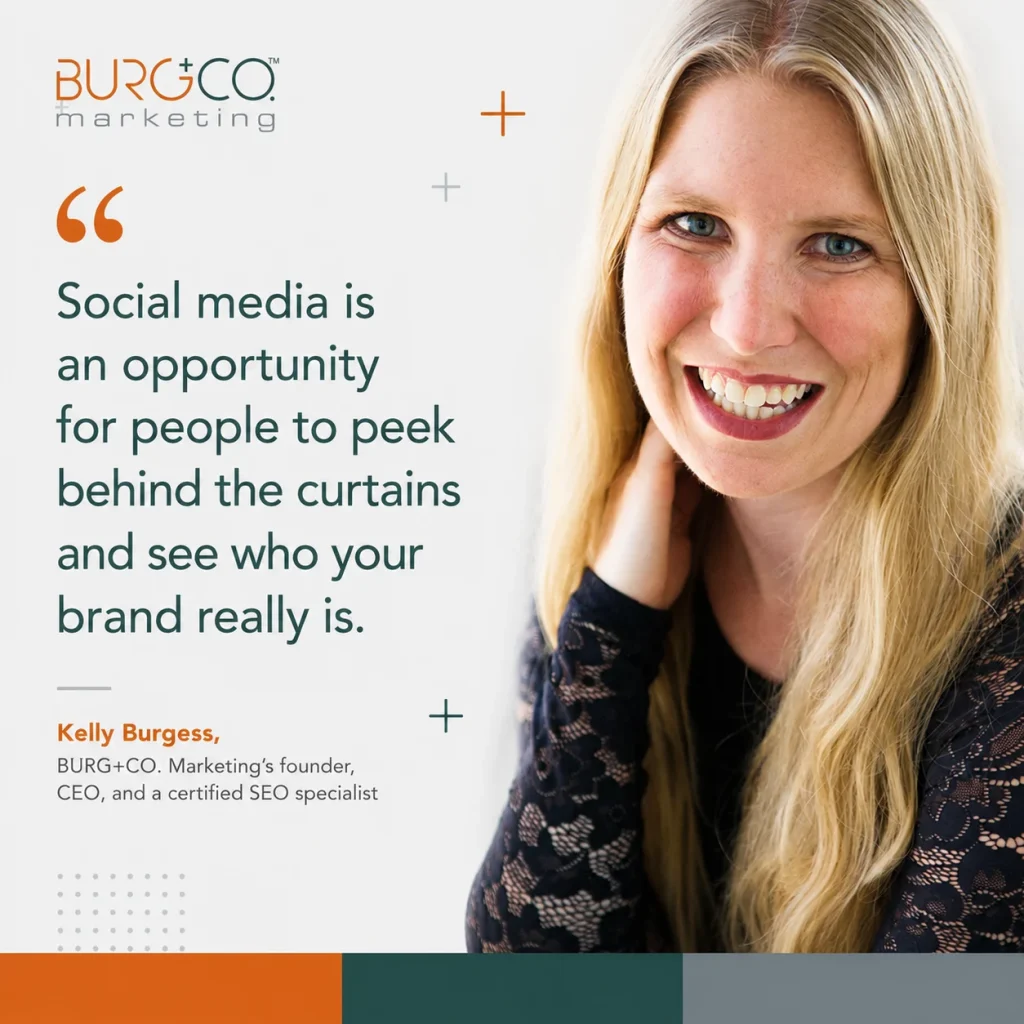
“Social media is an opportunity for people to peek behind the curtains and see who your brand really is.”
— Kelly Burgess, BURG+CO. Marketing’s founder, CEO and a certified SEO specialist
That doesn’t mean healthcare brands should overshare. It means your social presence should feel human, useful and aligned with the expectations people already have for a provider they may trust with their health.
Social media and SEO should work together
Social media and marketing shouldn’t live in separate universes. Your social posts can help extend the life of website content, reinforce key service topics and guide people back to deeper resources.
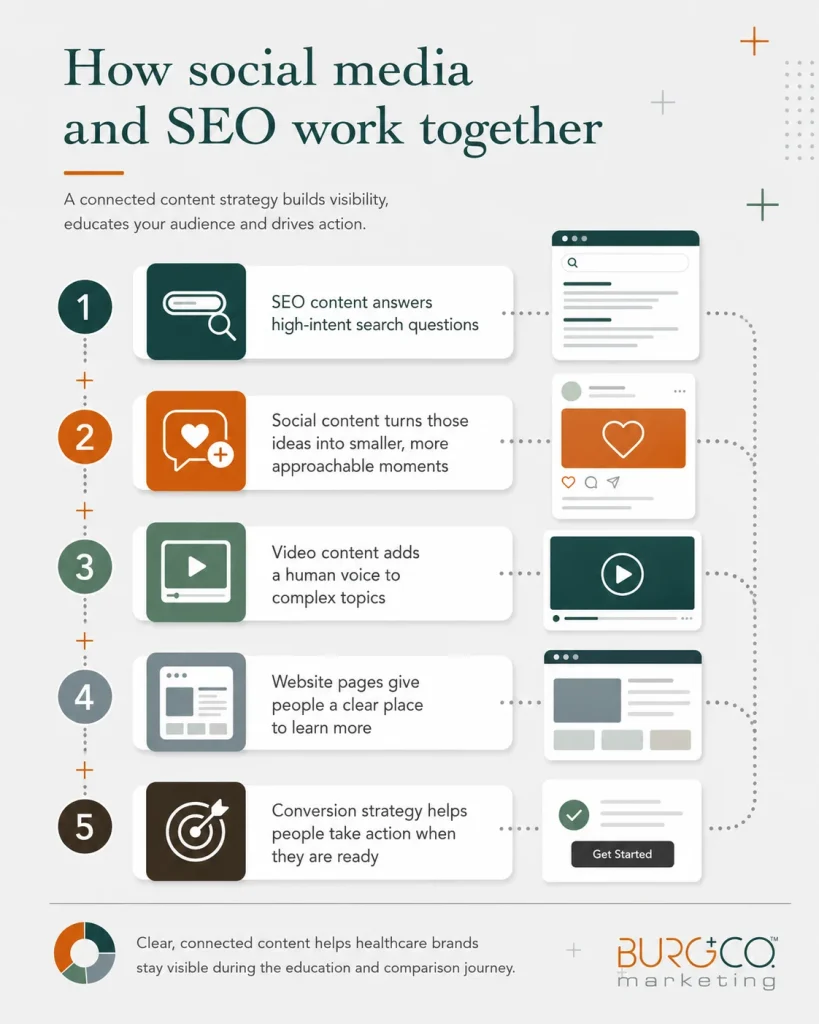
Here is how the connection often works:
- SEO content answers high-intent search questions
- Social content turns those ideas into smaller, more approachable moments
- Video content adds a human voice to complex topics
- Website pages give people a clear place to learn more
- Conversion strategy helps people take action when they are ready
For example, a healthcare brand may publish a blog about when to consider physical therapy for recurring back pain. Social content could turn that article into:
- A short educational carousel
- A provider video explaining when to seek care
- A LinkedIn post for referral partners
- A Facebook post for local community awareness
- A short FAQ-style caption that links back to the full blog
This approach supports consistency. It also helps AI-powered search and answer platforms understand your expertise across formats. Clear, structured content across your website and social channels can make your brand easier to understand, summarize and recommend.
What healthcare brands should post on social media
Your social content mix should reflect your audience’s questions, your brand’s expertise and your business goals. A balanced strategy usually includes more than one type of post.
| Content type | What it helps with | Healthcare-safe example |
| Educational content | Builds understanding and trust | “What to know before your first appointment” |
| Brand personality content | Shows the human side of the organization | Team introductions or community involvement |
| Service awareness content | Explains what you offer | A plain-language overview of a care program |
| Blog promotion content | Extends website content reach | A short post that links to a related article |
| Video content | Adds voice, clarity and connection | A provider answering a common question |
| Reputation content | Supports credibility | Approved testimonials or awards with careful context |
The best content mix depends on your audience. A pediatric therapy practice, a behavioral health provider and a multi-location physical therapy group may all need different approaches. The common thread is the same: Help people understand, trust and navigate.
What healthcare brands should avoid on social media
Social media moves fast. Healthcare marketing shouldn’t. That doesn’t mean your content has to be slow or boring. It means every post should pass a trust check before it goes live.
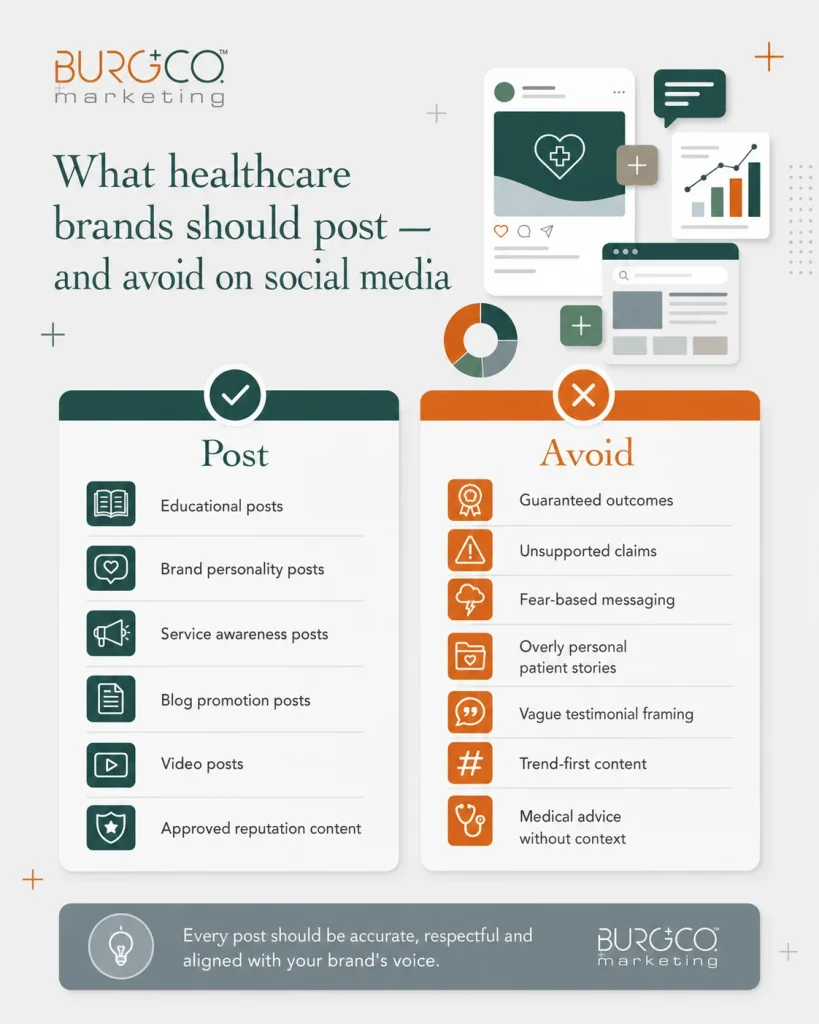
Healthcare brands should avoid:
- Guaranteed outcomes — Avoid language that promises specific results
- Unsupported claims — Don’t make claims your organization cannot back up
- Fear-based messaging — Don’t push people into action through panic or shame
- Overly personal patient stories — Protect privacy and avoid identifying details
- Vague testimonial framing — Don’t imply one person’s experience is typical
- Trend-first content — Don’t join a trend if it weakens trust or clarity
- Medical advice without context — Keep posts educational and encourage appropriate next steps
A client perspective on strategic digital marketing support from BURG+CO.
A strong social media strategy rarely works in isolation. It’s easier to keep content useful, clear and consistent when the strategy connects to SEO, website content, reporting and patient decision-making.
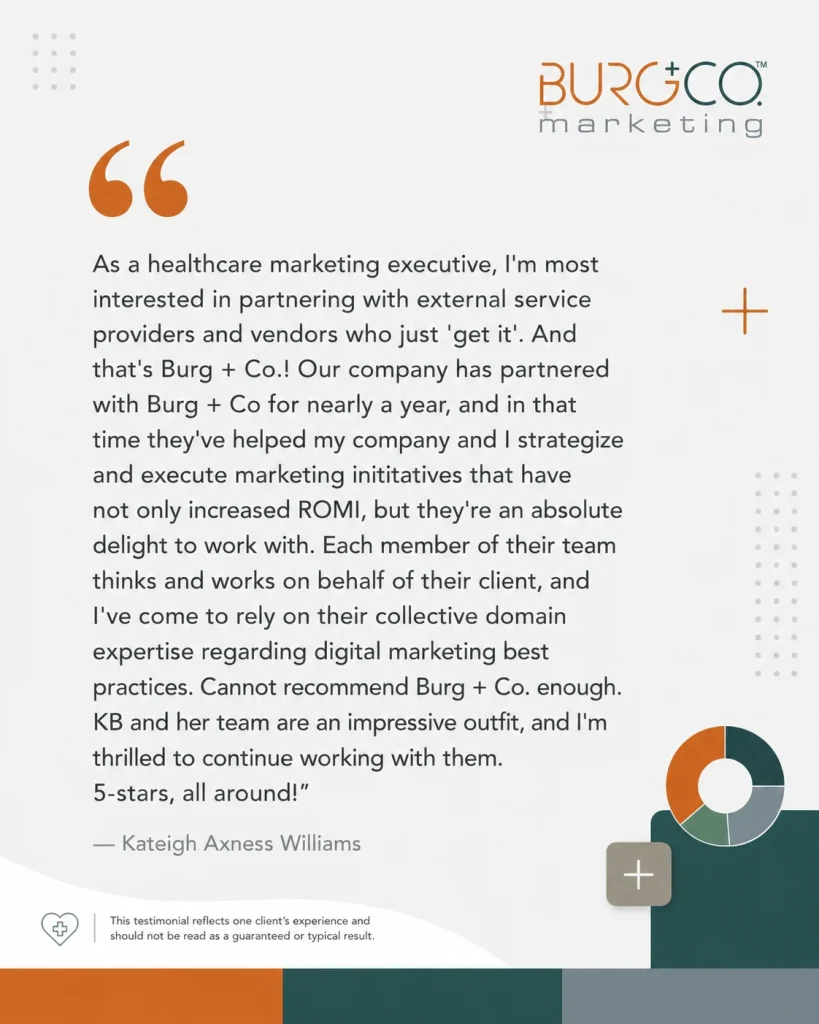
“As a healthcare marketing executive, I’m most interested in partnering with external service providers and vendors who just ‘get it’. And that’s Burg + Co.! Our company has partnered with Burg + Co for nearly a year, and in that time they’ve helped my company and I strategize and execute marketing initiatives that have not only increased ROMI, but they’re an absolute delight to work with. Each member of their team thinks and works on behalf of their client, and I’ve come to rely on their collective domain expertise regarding digital marketing best practices. Cannot recommend Burg + Co. enough. KB and her team are an impressive outfit, and I’m thrilled to continue working with them. 5-stars, all around!”
— Kateigh Axness Williams
This testimonial reflects one client’s experience and shouldn’t be read as a guaranteed or typical result. The takeaway is simpler and more useful: Healthcare marketing works better when every channel has a strategy behind it.
BURG+CO. Marketing helps healthcare brands build digital strategies that are thoughtful, measurable and grounded in how people actually search, compare and choose care. Whether your team needs help clarifying your content strategy, strengthening your website journey or connecting social media to search visibility, we’re ready to help you make the next move with a little more strategy and a little less “posting just to post.”
Want expert support with your digital marketing? Connect with BURG+CO. today to explore how we can help your healthcare brand grow.
FAQs about social marketing and social media
What is the difference between social marketing and social media?
Social media refers to the platforms where your content appears. Social marketing is the strategy behind the content, including audience, message, goals, timing and how each post supports the larger patient journey.
Is social media marketing important for healthcare providers?
Yes, social media can help healthcare providers build awareness, explain services and show the human side of the brand. It should support trust and education rather than rely on pressure or exaggerated claims.
Should healthcare brands measure social media by conversions?
Conversions can matter, but they shouldn’t be the only measurement. Social media often supports awareness, trust, website traffic and content engagement before someone is ready to contact a provider.
What should healthcare providers post on social media?
Healthcare providers can post educational content, service explanations, blog highlights, videos, community updates and approved reputation content. Every post should be accurate, respectful and aligned with the brand’s voice.
How does social media support SEO?
Social media can extend the reach of website content and guide people back to helpful pages. SEO captures search demand, while social media can keep your brand visible during the education and comparison stages.
How often should a healthcare brand post on social media?
There is no perfect number. A consistent, sustainable schedule is usually better than a short burst of posts followed by silence. Start with a cadence your team can maintain and improve it over time.
Which social media platform is best for healthcare marketing?
The best platform depends on your audience and goals. LinkedIn may help with referral partners or executives. Facebook may help with local community reach. Instagram, YouTube or TikTok may support visual education or video content.
Can healthcare providers use testimonials on social media?
They can, but testimonials need careful review. Avoid implying that one person’s experience is typical or guaranteed. Also consider privacy, consent, disclosure and platform-specific rules before posting.
Should healthcare social media be handled by clinicians or marketers?
Usually, it works best as a partnership. Clinicians can help ensure accuracy and usefulness. Marketers can help shape the content for clarity, strategy, accessibility and channel fit.
What makes healthcare social media effective?
Effective healthcare social media is clear, accurate, consistent and audience-focused. It helps people understand the brand, answers real questions and points them toward trustworthy next steps without pressure.