
Physical therapy clinics have more ways than ever to connect with potential patients online. Between search engines, social media, video platforms and AI-powered search tools, patients can discover your clinic through dozens of digital touchpoints before they ever make an appointment.
The challenge is that visibility alone isn’t enough.
Many clinics invest in digital marketing and successfully bring people to their website, only to discover that those visitors never become patients. Effective physical therapy marketing isn’t just about generating traffic. It’s about creating meaningful engagement that builds trust and encourages people to take the next step with your clinic.
So what actually engages patients?
The answer is simpler than many providers think. Patients engage with content, websites and marketing messages that make them feel understood, informed and confident in their decision to seek care.
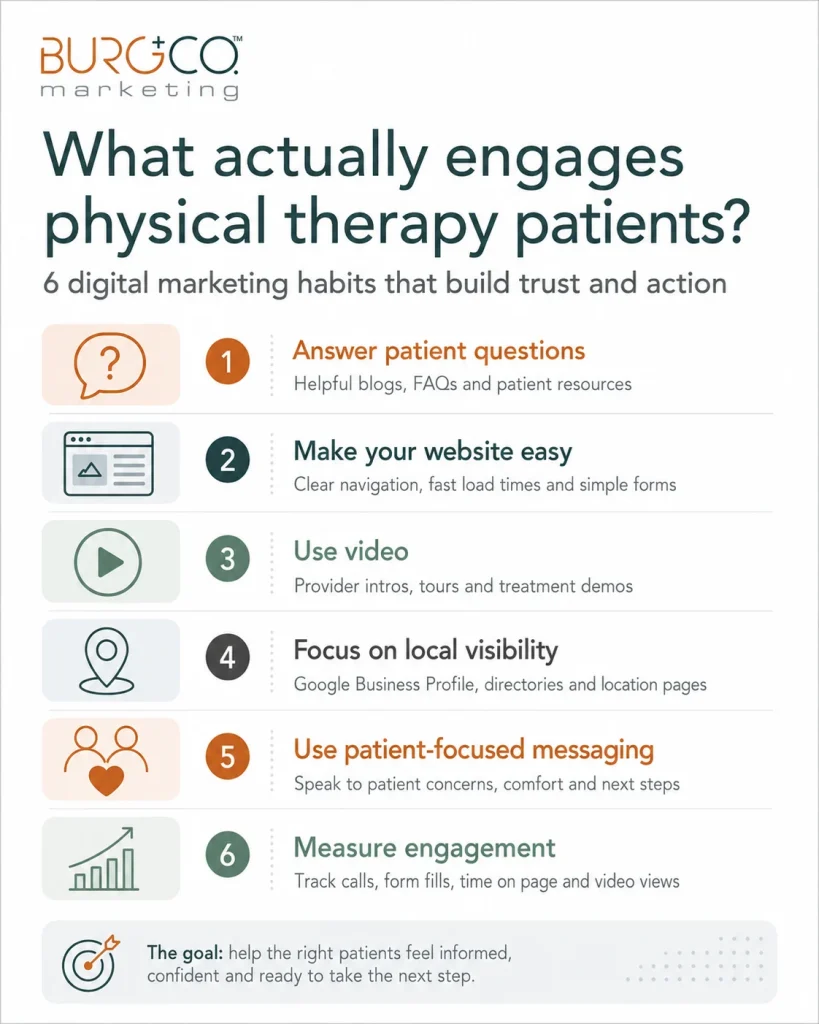
Here are a few ways to encourage marketing engagement from patients:
-
Start by answering patient questions
Patients often begin their healthcare journey with questions, not appointment requests.
They may be searching for:
- Why does my shoulder hurt when I lift my arm?
- How long does physical therapy take after knee surgery?
- Do I need a referral for physical therapy?
- Can physical therapy help with chronic back pain?
When your clinic creates content that directly answers these questions, you build trust before a patient ever contacts your office.
As Aaron Brintzenhofe, BURG+CO. Marketing’s Director of Content & Growth Operations, explains:
“Content marketing builds trust, and healthcare brands should not underestimate how important trust is in the patient-provider relationship.”
Educational blog content, FAQs, videos and patient resources can position your clinic as a trusted source of information while supporting long-term search visibility.
-
Make your website easy to navigate
Patient engagement often depends on the experience visitors have after arriving on your website. A confusing website can create friction and cause potential patients to leave before taking action.
Strong physical therapy marketing websites focus on:
- Clear navigation
- Fast page loading speeds
- Mobile-friendly design
- Easy-to-find contact information
- Simple appointment request forms
- Visible calls to action
User experience matters because patients often make decisions quickly. If they can’t easily find answers or schedule an appointment, they may continue their search elsewhere.
-
Use video to create human connections
Healthcare decisions are personal. Patients want to know who they will be working with before they schedule an appointment. Video helps bridge that gap.
Consider creating videos that feature:
- Physical therapists introducing themselves
- Facility tours
- Patient success stories
- Treatment demonstrations
- Answers to common patient questions
Videos allow patients to see your team’s personality, expertise and approach to care. Video content can also improve engagement on your website and support visibility in search results.
-
Focus on local visibility
Most physical therapy patients are looking for care close to home. That means local search optimization remains one of the most important components of physical therapy marketing.
Your clinic should maintain:
- An optimized Google Business Profile
- Consistent business information across directories
- Location-specific webpages
- Local patient reviews
- Community-focused content
When local visibility improves, your clinic becomes easier to find when patients search for services in your area.
-
Build trust through patient-focused messaging
One common mistake clinics make is focusing too heavily on themselves.
Patients care about your credentials and experience, but they are primarily looking for answers to questions such as:
- Can you help me?
- What will treatment be like?
- Will I feel comfortable here?
- What results can I realistically expect?
Patient-focused messaging keeps the conversation centered on the patient’s goals and concerns. Instead of discussing services broadly, explain how those services help patients return to the activities they enjoy.
This approach creates stronger engagement because it aligns with the patient’s decision-making process.
-
Measure engagement, not just traffic
Traffic alone doesn’t tell the full story. Successful physical therapy marketing evaluates how patients interact with your website and content.
Useful engagement metrics include:
- Appointment requests
- Phone calls
- Form submissions
- Time spent on page
- Video views
- Click-through rates
- User journey behavior
Understanding how visitors move through your website can reveal opportunities to improve conversions and patient acquisition.
-
Real engagement creates real growth
Patient engagement isn’t about flashy marketing tactics or chasing trends.
It’s about creating a digital experience that helps people feel informed, comfortable and confident enough to take the next step. That approach consistently produces measurable results.
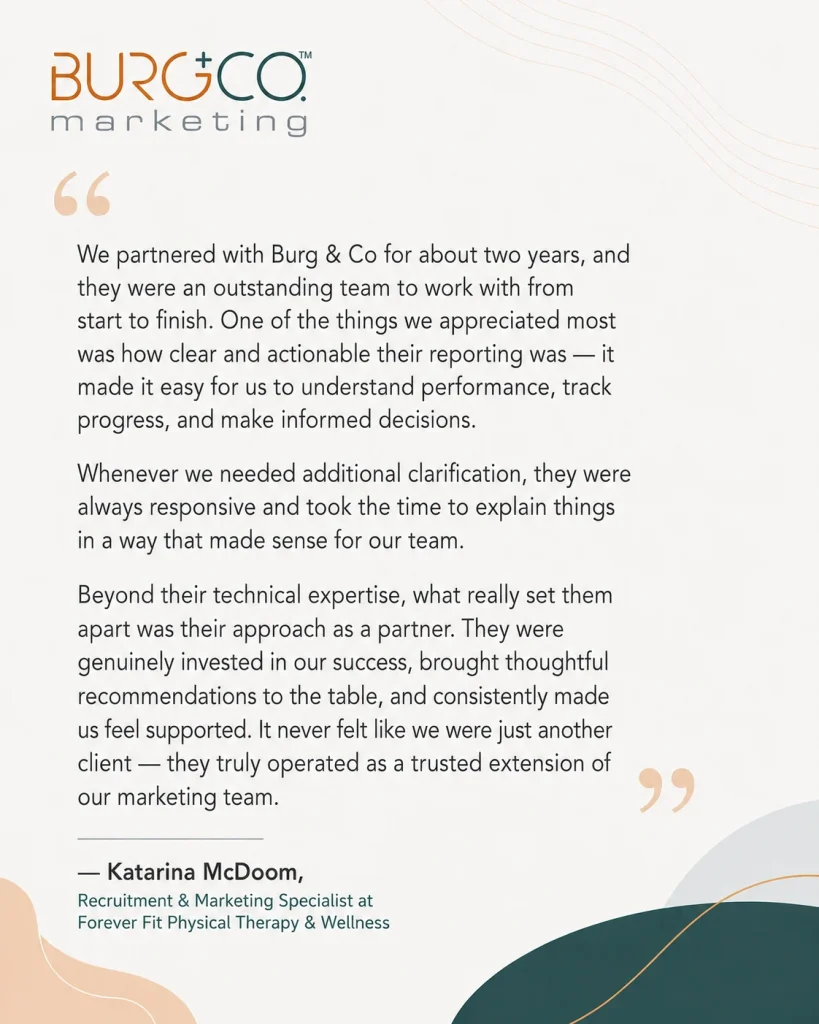
As one BURG+CO. client, Excel Sports and Physical Therapy, shared:
“Our organic traffic has doubled in the past year from working with Burg + Co. Marketing. We went from about 500 organic visitors per week to 1,100 per week by the end of the year. This increase resulted in increased patients and website conversions.”
When physical therapy clinics focus on trust, education, accessibility and user experience, engagement becomes a natural outcome.
The most effective physical therapy marketing strategies focus on helping patients find answers, build confidence and take the next step. The table below highlights common digital marketing activities and how they contribute to patient engagement.
| Digital marketing activity | Why patients engage with it | How it supports physical therapy marketing |
| Educational blog content | Answers questions patients are already searching for | Builds trust and improves search visibility |
| Patient-focused website copy | Helps visitors quickly understand how you can help them | Encourages appointment requests and conversions |
| Provider introduction videos | Allows patients to see the people behind the practice | Creates familiarity and strengthens trust |
| FAQ pages | Provides quick answers to common concerns | Reduces friction during the decision-making process |
| Google Business Profile optimization | Makes it easier for local patients to find accurate information | Improves local visibility and discovery |
| Patient testimonials | Shows real experiences from other patients | Builds credibility and confidence |
| Easy-to-use appointment forms | Simplifies the next step for interested visitors | Increases conversion opportunities |
| Mobile-friendly website design | Creates a better experience for users on phones and tablets | Improves engagement and reduces drop-offs |
| Local community content | Demonstrates relevance to the surrounding area | Helps attract patients searching for nearby care |
| Educational videos | Explains conditions, treatments and recovery expectations | Supports patient education and engagement |
If you’re trying to create more engaging digital marketing efforts, BURG+CO.’s SEO and content marketing services are what you’re looking for. We know what resonates with patients and how to get them to move along the patient acquisition funnel.
Want expert support with your digital marketing? Connect with BURG+CO. today to explore how we can help your healthcare brand grow.
FAQs about physical therapy marketing
What is physical therapy marketing?
Physical therapy marketing refers to the strategies that clinics use to attract, engage and retain patients through channels such as SEO, content marketing, social media, video and local search.
Why is patient engagement important in physical therapy marketing?
Patient engagement helps build trust and encourages people to take action, whether that means scheduling an appointment, calling your clinic or learning more about your services.
What type of content engages physical therapy patients?
Educational content that answers patient questions, addresses common concerns and provides practical guidance often performs well.
Does video marketing help physical therapy clinics?
Yes. Video can help patients become familiar with your providers, understand treatment options and build confidence before scheduling an appointment.
How does website design affect patient engagement?
A well-designed website makes it easier for visitors to find information, contact your clinic and request appointments.
How long does physical therapy marketing take to show results?
The timeline varies by strategy. Paid advertising can generate faster visibility, while SEO and content marketing often build momentum over several months.
What is local SEO for physical therapy clinics?
Local SEO focuses on helping your clinic appear in local search results when patients search for nearby physical therapy services.
Should physical therapy clinics use social media?
Yes. Social media can help humanize your brand, build awareness and strengthen relationships with current and prospective patients.
How often should physical therapy clinics publish content?
Consistency matters more than volume. A regular publishing schedule that addresses patient needs can support engagement and search visibility.
What is the most important goal of physical therapy marketing?
The ultimate goal is to help the right patients find your clinic, trust your expertise and take the next step toward receiving care.