
Inbound marketing strategy is not about shouting louder. For healthcare providers, it is about showing up with the right information at the right moment, then making the next step feel clear, safe and doable.
Healthcare decisions are rarely casual. People may be comparing symptoms, providers, treatment options, insurance questions, privacy concerns or location needs. They may also be searching on behalf of a child, parent, partner or friend. Inbound marketing helps you meet those questions with useful content instead of forcing people straight into a hard sell.
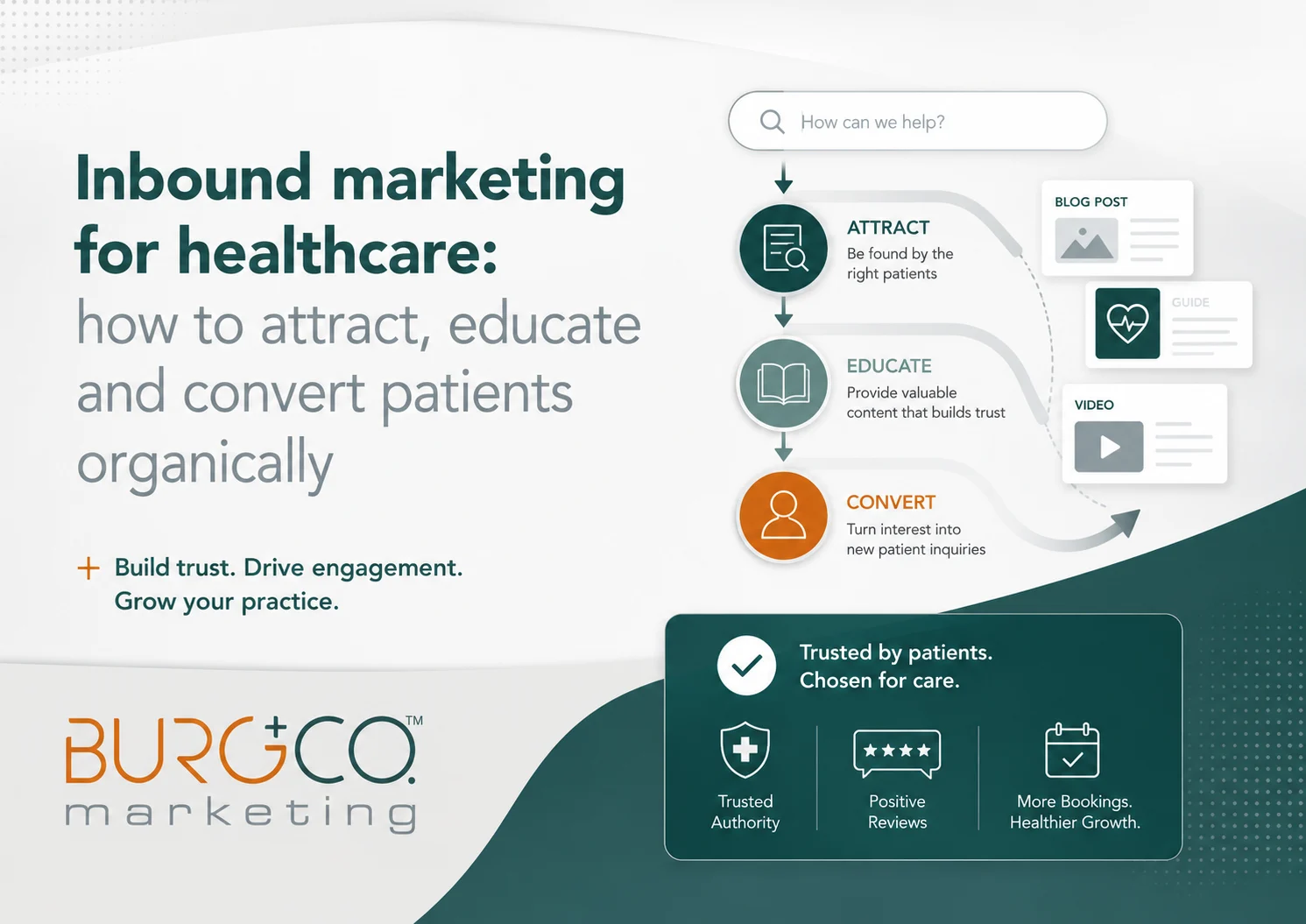
Inbound marketing helps people find you because your content is helpful, relevant and easy to trust. In healthcare, that means your strategy should do three things well:
- Attract the right audience through SEO, local search, AI search visibility and helpful resources
- Educate people with accurate, plain-language content that answers real questions
- Convert visitors through clear calls to action, thoughtful page design and a patient-centered website journey
Not flashy or spammy. Just useful marketing built around how people actually make care decisions.
Read on to learn the ins and outs of inbound marketing in the healthcare industry.
What is inbound marketing for healthcare?
Inbound marketing for healthcare is a strategy that uses helpful digital content to bring prospective patients, families, referral partners or healthcare decision-makers to your website organically. Instead of interrupting people with messages they did not ask for, inbound marketing answers the questions they are already asking.
A strong inbound marketing strategy may include:
- SEO-focused service pages
- Educational blog content
- Local search optimization
- Video resources
- Frequently asked questions
- Email nurture content
- Downloadable guides
- Patient journey pages
- Conversion-focused website design
- Trust signals, such as reviews, credentials, author bios and clear next steps
For healthcare brands, inbound marketing should also respect the seriousness of the decision. Content should be clear without being simplistic. It should be empathetic without being fear-based. It should guide action without pressuring people.
Why inbound marketing strategy matters in healthcare
Healthcare marketing has a trust problem before it has a traffic problem. A prospective patient may not know whether your clinic is the right fit. A family member may be worried about making the wrong choice. A referring provider may want to understand your services before they recommend you.
Inbound marketing gives your organization a way to build trust before the first phone call.
That trust can grow when your content:
- Answers common questions honestly
- Explains services in plain language
- Helps people understand what to expect
- Shows the expertise behind your care model
- Makes the next step easy to find
- Avoids exaggerated claims or guaranteed outcomes
Google’s people-first content guidance also lines up with this approach. Helpful content should be created for people first, not just for search engines. In healthcare, that is not just good SEO. It is the baseline for responsible communication.
The inbound strategy should be shaped by the patient journey
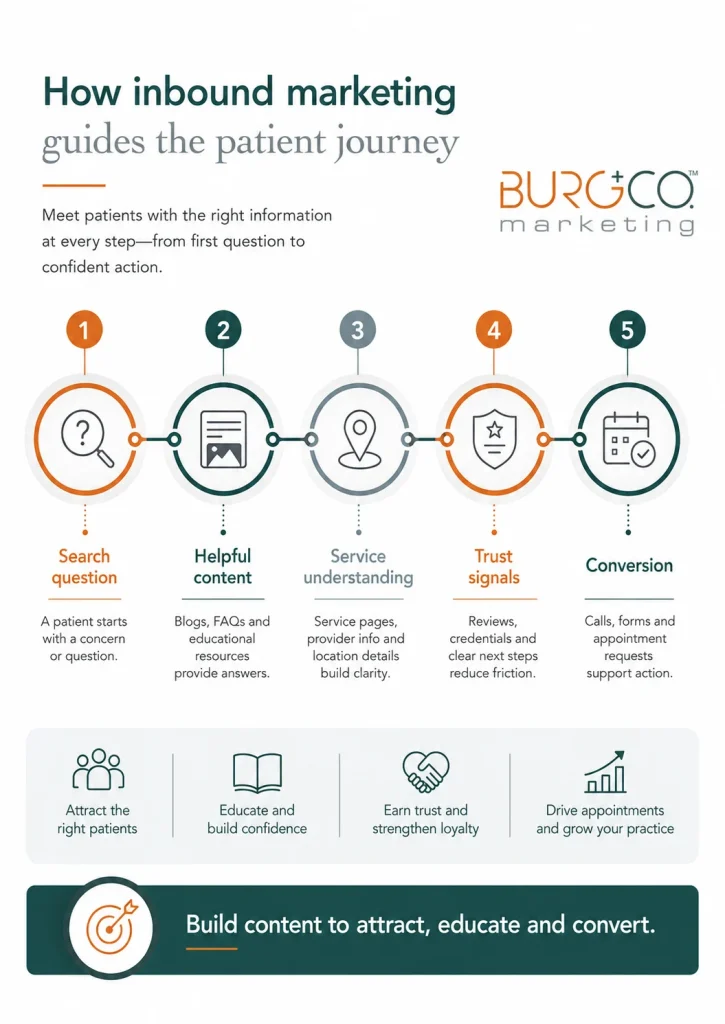
A healthcare inbound marketing strategy works best when it follows the real decision journey. That journey usually is not a neat funnel. It is more like a winding hallway with a few emotional support tabs open.
A person may start with a broad question, such as “why does my knee hurt when I run?” Then they may search for treatment options, compare providers and finally look for appointment information. Each step needs different content.
Here is a simple way to map it:
| Patient journey stage | What the person may be asking | Helpful inbound content | Marketing goal |
| Awareness | “What could be causing this?” | Educational blogs, symptom guides and videos | Help the person understand the issue |
| Consideration | “What are my treatment options?” | Service pages, comparison content and FAQs | Build trust and clarify fit |
| Decision | “Can this provider help me?” | Location pages, provider bios, reviews and next-step pages | Make contact feel easy |
| Follow-up | “What happens next?” | Email content, prep guides and care instructions | Reduce confusion and support engagement |
Use this table as a planning filter. If your website only has decision-stage content, you may miss people who are still learning. If it only has educational content, you may attract readers who do not know how to become patients.
Start with patient questions, not brand talking points
This is where many healthcare inbound strategies wander off trail. The brand wants to talk about its services, credentials and differentiators. Those things matter. But your audience is usually starting from a more personal question.
A helpful inbound marketing strategy asks:
- What are patients searching before they know our service name?
- What concerns might stop them from contacting us?
- What location, insurance or access questions do they have?
- What do families or caregivers need to know?
- What information helps someone feel more prepared?
- What makes our organization a trustworthy choice?
That is also where content strategy and patient psychology should work together. Healthcare content should not just match keywords. It should match the emotion, intent and decision stage behind the keyword.
A strong healthcare content strategy starts with the audience’s needs.
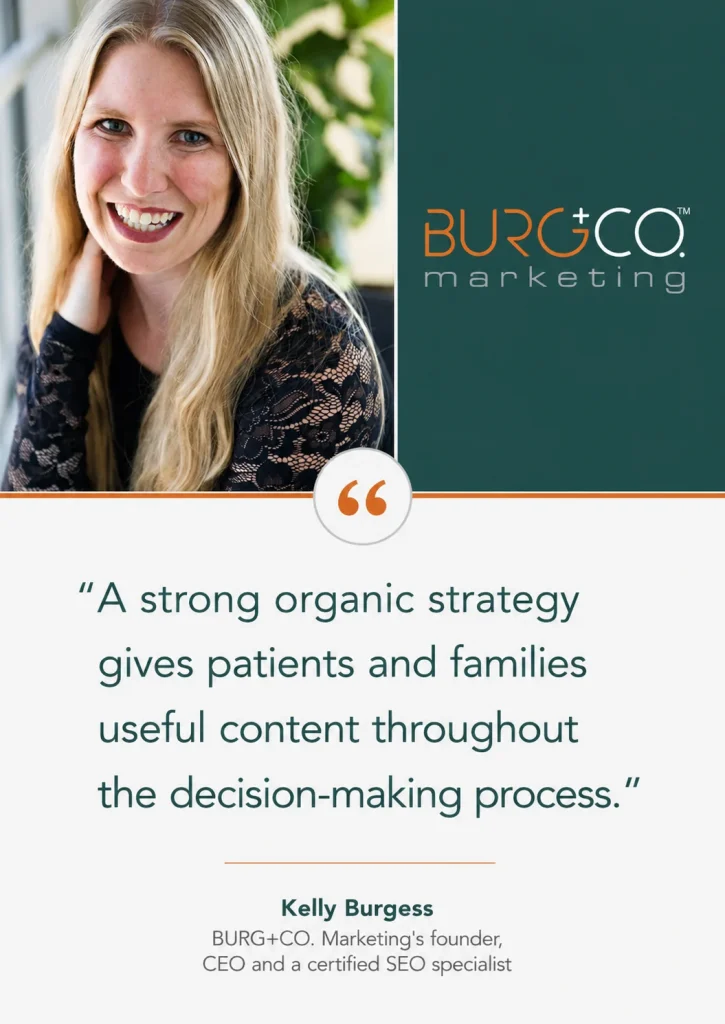
“A strong organic strategy gives patients and families useful content throughout the decision-making process.”
— Kelly Burgess, BURG+CO. Marketing’s founder, CEO and a certified SEO specialist
That is the heart of inbound marketing in healthcare. Your strategy should help people move from uncertainty to clarity without making them feel rushed, judged or sold to.
Build content around organic search and AI search
Search is changing. People still use Google, but they are also getting answers from AI Overviews, ChatGPT, Gemini and other answer engines. That means your inbound marketing strategy should be built for both traditional SEO and AI-driven discovery.
The good news is that the foundation is not wildly different. Clear, useful, well-structured content still matters. The difference is that AI search tools often summarize information instead of simply listing pages. If your content is vague, thin or hard to interpret, it may be less likely to be included in those answer layers.
To support SEO, AEO and GEO, your content should:
- Answer the main question early
- Use clear headings that match natural questions
- Explain complex terms in simple language
- Include credible sources where needed
- Show expertise through helpful details
- Connect related pages with internal links
- Use structured data when appropriate
- Keep claims accurate, specific and supportable
Make conversion part of the strategy from the beginning
Inbound marketing does not stop when someone lands on your website. That is where the next set of questions begins. Can they find the service they need? Can they tell whether you serve their location? Can they see what to do next? Can they contact you without hunting through the footer like it owes them money?
Conversion strategy helps turn helpful content into a useful patient journey. That does not mean every page needs a giant “Schedule Now” button every three lines. It means each page should give the reader a next step that matches their intent.
Examples include:
- A blog about symptoms linking to a related service page
- A service page linking to a location or appointment page
- A provider page linking to accepted insurance details
- A FAQ section answering common access questions
- A call to action that says what happens after someone reaches out
This is especially important for healthcare providers because the wrong next step can create friction. A person who is still learning may need another educational resource. A person searching “physical therapy near me” may need a location page. A family comparing treatment options may need a service guide and a way to talk with someone.
Measure quality, not just volume
Inbound marketing strategy should be measurable, but the right metrics matter. Traffic is useful. Rankings are useful. Leads are useful. But healthcare providers also need to know whether those signals are bringing in the right people.
Depending on your organization, useful metrics may include:
- Organic visibility for high-intent keywords
- Local ranking performance
- Blog-assisted conversions
- Service page engagement
- Call and form submissions
- Qualified inquiries
- Appointment requests
- Admissions or new patient volume
- Conversion rates by page type
- Content gaps by service line or location
The goal isn’t to fixate on the dashboard. The goal is to learn what is helping people move forward and what is creating friction.
A client perspective can help show why clarity and reporting matter in a healthcare marketing partnership without implying that every organization will see the same experience.
“We partnered with Burg & Co for about two years, and they were an outstanding team to work with from start to finish. One of the things we appreciated most was how clear and actionable their reporting was — it made it easy for us to understand performance, track progress, and make informed decisions. Whenever we needed additional clarification, they were always responsive and took the time to explain things in a way that made sense for our team. Beyond their technical expertise, what really set them apart was their approach as a partner. They were genuinely invested in our success, brought thoughtful recommendations to the table, and consistently made us feel supported. It never felt like we were just another client — they truly operated as a trusted extension of our marketing team.”
— Katarina McDoom, Recruitment & Marketing Specialist at Forever Fit Physical Therapy & Wellness
The takeaway is simple: Inbound marketing works better when strategy, execution and reporting are connected. You should know what is being created, why it matters and how it supports your larger growth goals.
BURG+CO. Marketing helps healthcare providers build organic strategies that support patient education, search visibility and conversion paths without losing the human side of marketing.
Looking to elevate your healthcare marketing strategy? Reach out to our team for personalized insights and next steps.
FAQs about inbound marketing strategy
What is an inbound marketing strategy in healthcare?
An inbound marketing strategy in healthcare uses helpful content, SEO and website conversion paths to attract and guide people who are already searching for information. It focuses on education and trust before promotion.
How is inbound marketing different from outbound marketing?
Inbound marketing helps people find your organization through useful content and organic visibility. Outbound marketing usually pushes messages to an audience through ads, calls, mailers or other direct promotion.
Why does inbound marketing work well for healthcare providers?
Healthcare decisions often involve questions, emotions and trust concerns. Inbound marketing gives providers a way to answer those questions before a patient or family member reaches out.
What types of content support inbound healthcare marketing?
Helpful content can include service pages, blog articles, FAQs, videos, location pages, provider bios, email nurture content and downloadable guides. The right mix depends on your audience and goals.
How should healthcare providers measure inbound marketing success?
Healthcare providers should track visibility, engagement, qualified inquiries, appointment requests and patient-related outcomes when available. Traffic matters, but it should not be the only metric.
Does inbound marketing replace paid advertising?
Not always. Paid advertising can support short-term visibility, while inbound marketing can help build long-term organic presence. Many healthcare brands use both as part of a broader strategy.
How long does inbound marketing take to work?
Inbound marketing usually takes time because organic visibility, content quality and trust signals build gradually. The timeline depends on competition, website health, content depth and how consistent the strategy is.
Can inbound marketing help with AI search visibility?
Yes, it can support AI search visibility when content is clear, structured, accurate and useful. AI search tools often rely on content they can understand, summarize and connect to user questions.
Is healthcare inbound marketing compliant?
It can be, but it needs careful planning and review. Healthcare content should avoid unsupported claims, protect patient privacy and follow applicable legal, ethical and platform guidelines.
What makes an inbound marketing strategy strong?
A strong inbound marketing strategy connects audience research, SEO, content, website experience, conversion paths and reporting. It should help the right people find useful answers and take the next step when they are ready.