
Choosing healthcare rarely looks like clicking one ad and immediately requesting an appointment. People search, compare, pause, ask family members, check insurance information and return to the research later. A consumer journey map helps healthcare marketers understand those steps so they can build a clearer path from the first question to completing conversions.
The map isn’t meant to reduce people to tidy boxes on a marketing slide. Healthcare decisions are personal, emotional and often nonlinear. A useful map shows what people may need at each stage and where your current marketing experience may be making that journey easier — or unnecessarily complicated.
What is a consumer journey map?
A consumer journey map is a visual or written outline of the steps people take as they learn about a need, explore solutions, evaluate providers and decide what to do next.
For healthcare organizations, a map may include:
- Questions people search online
- Pages they visit
- Information they need before considering care
- Emotional or practical concerns
- Channels they use to research providers
- Actions that signal growing intent
- Points where confusion or friction may stop progress
A traditional marketing funnel can make this process look pleasantly neat. Real people are less cooperative. They may move backward, skip steps or revisit the same page several times. Your map should reflect that reality.
5 stages of the consumer journey map
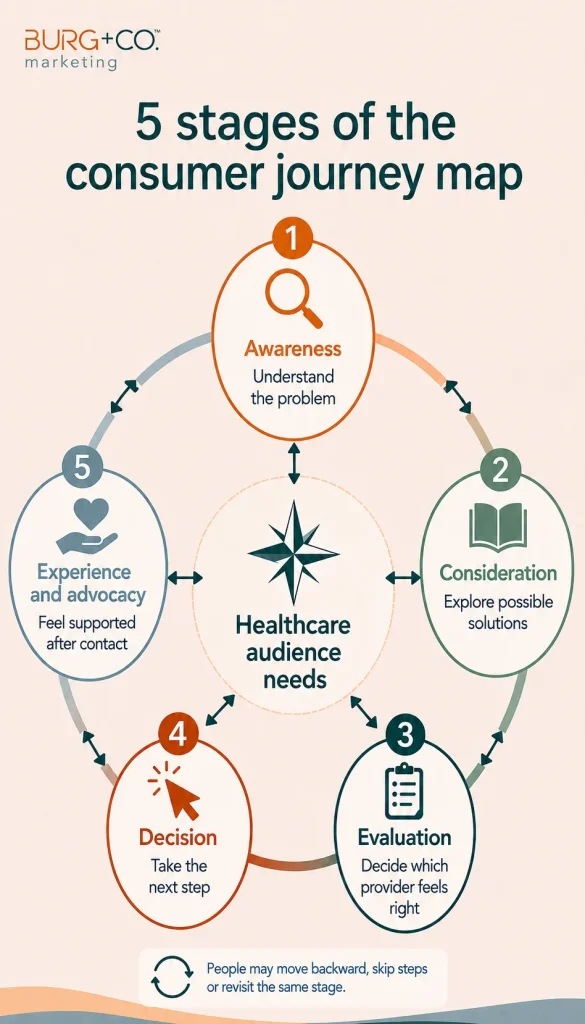
If you’re trying to understand how people move through their relationship with your healthcare brand or practice. Here are the five stages of the consumer journey map to keep in mind as you create your marketing strategies:
Stage 1: Awareness
During the awareness phase, a person recognizes a problem, symptom, goal or unmet need. They may not know what service they need or whether professional care is appropriate.
Their searches might sound like:
- “Why does my shoulder hurt when I sleep?”
- “Signs my teen needs more mental health support”
- “Why do I feel anxious every morning?”
- “How can physical therapy help balance problems?”
At this stage, people need clear education rather than a hard sales pitch. Helpful resources may include symptom guides, introductory videos, condition pages and plain-language FAQs.
Stage 2: Consideration
During the consideration stage, the person understands the general issue and begins exploring possible solutions. They may compare treatment approaches, care levels, provider types or locations.
Your content should answer questions such as:
- What does this service involve?
- Who may benefit from it?
- How is it different from another option?
- What should someone expect?
- Is the service available nearby?
- How does insurance or payment work?
This stage is where depth matters. Thin pages that repeat a service name several times will not magically create trust. People need useful explanations, meaningful comparisons and evidence that your organization understands their concerns.
Stage 3: Evaluation
Evaluation is the comparison stage. People may review several organizations and weigh practical, emotional and trust-related factors.
They may look at:
- Credentials and areas of expertise
- Reviews and testimonials
- Locations and availability
- Insurance information
- Treatment philosophy
- Website ease of use
- Staff bios
- Answers to sensitive questions
A person can leave a technically accurate website because it feels cold, confusing or difficult to navigate. Your consumer journey map should identify what builds confidence and what introduces friction.
A relevant expert perspective captures why the journey must extend beyond a marketing conversion.
“A patient journey should not end with a contact form; it should carry people from search to your website and ultimately into your clinic doors.”
— Kelly Burgess, BURG+CO. Marketing’s founder, CEO and a certified SEO specialist
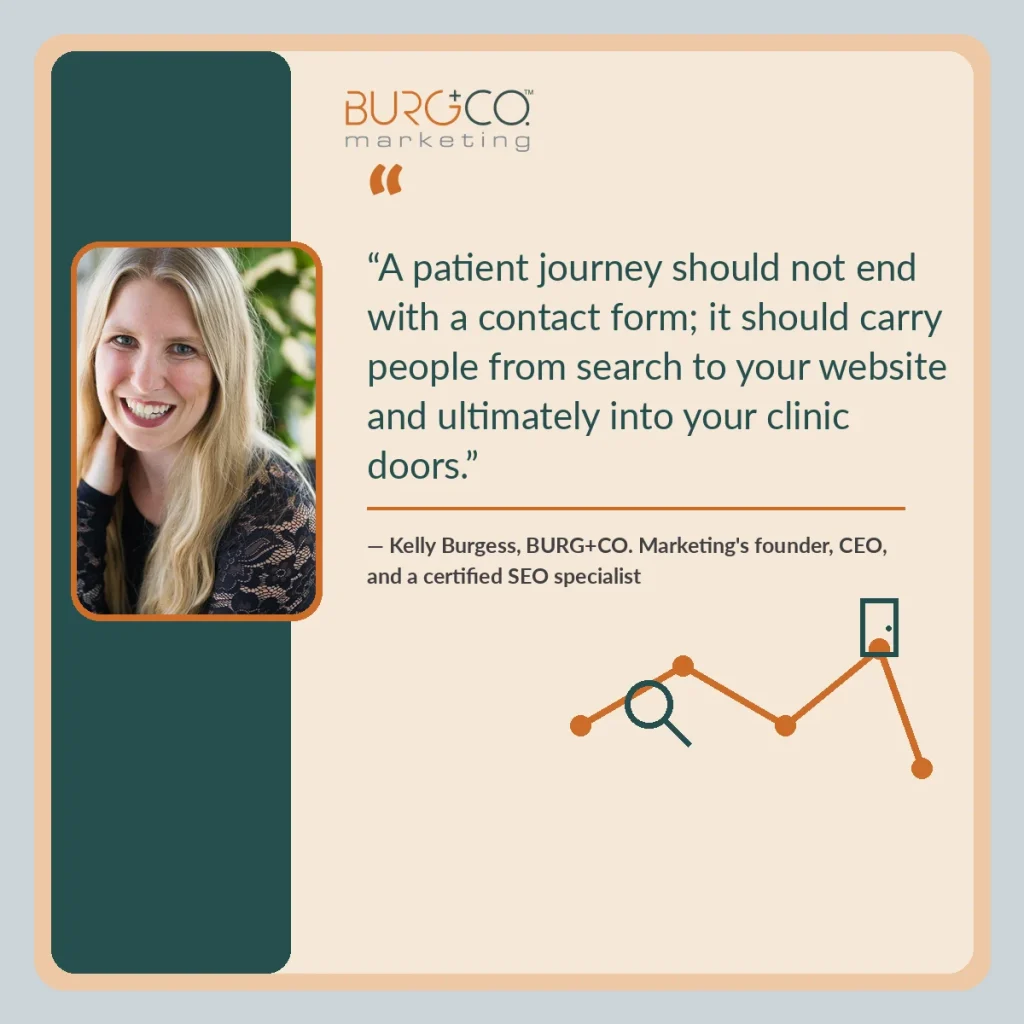
The takeaway is simple: The form is one step. The experience before and after it still matters.
Stage 4: Decision and action
At the decision stage, someone is ready to take a meaningful next step. That may mean requesting an appointment, calling an admissions team, verifying insurance, scheduling a consultation or submitting a referral.
The action should feel clear and manageable. Review whether:
- Calls to action match the page’s purpose
- Forms ask only for necessary information
- Phone numbers are easy to find on mobile devices
- Location and scheduling details are current
- Privacy language is understandable
- Confirmation messages explain what happens next
Here is a practical way to align the journey with your marketing:
| Journey stage | Primary audience need | Helpful content or experience | Useful signal to review |
| Awareness | Understand the problem | Educational articles and FAQs | Search visibility and engaged visits |
| Consideration | Explore possible solutions | Service guides and comparisons | Movement from resources to service pages |
| Evaluation | Decide which provider feels right | Reviews, bios and clear access details | Return visits and key-page engagement |
| Decision | Take the next step | Visible calls to action and simple forms | Qualified calls and completed requests |
| Experience and advocacy | Feel supported after contact | Clear follow-up and useful ongoing resources | Feedback, retention and referrals |
Stage 5: Experience and advocacy
The consumer journey doesn’t stop once someone becomes a patient or client. The experience after conversion can influence retention, referrals, reviews and long-term trust.
Marketing and operations should work together to review:
- Confirmation and follow-up communication
- Expectations before the first appointment
- Educational resources during care
- Feedback opportunities
- Ongoing email or social content
- Review and referral requests
- Reengagement resources when appropriate
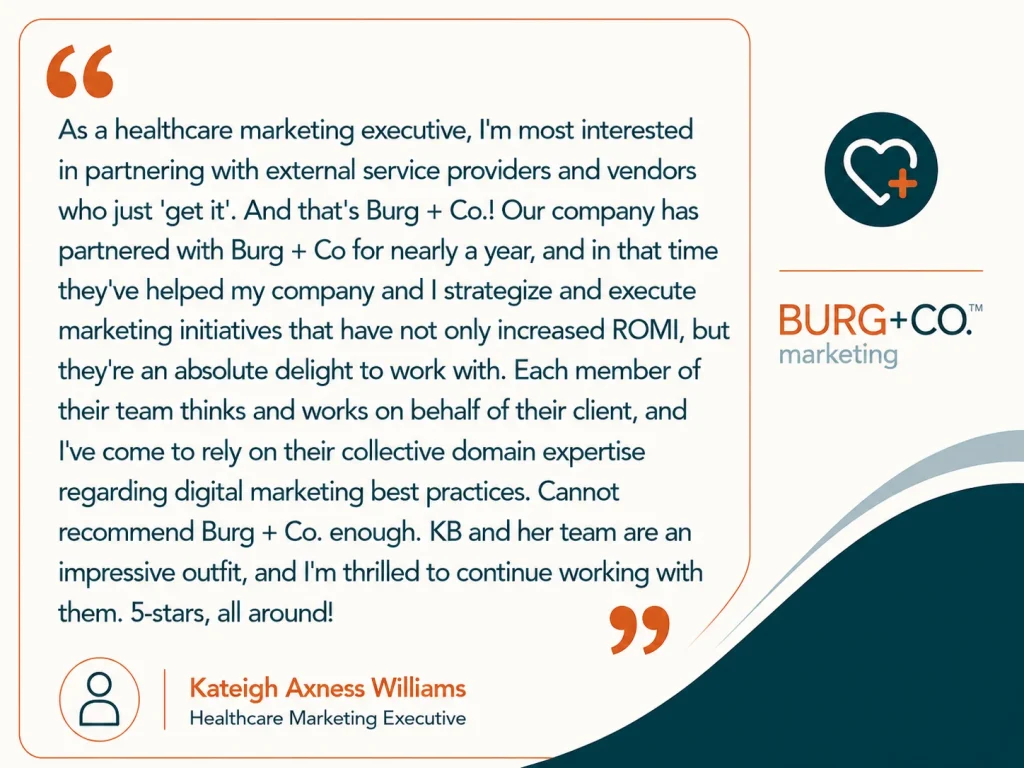
One client described the value of having a partner who made performance easier to understand and use:
“As a healthcare marketing executive, I’m most interested in partnering with external service providers and vendors who just ‘get it’. And that’s Burg + Co.! Our company has partnered with Burg + Co for nearly a year, and in that time they’ve helped my company and I strategize and execute marketing initiatives that have not only increased ROMI, but they’re an absolute delight to work with. Each member of their team thinks and works on behalf of their client, and I’ve come to rely on their collective domain expertise regarding digital marketing best practices. Cannot recommend Burg + Co. enough. KB and her team are an impressive outfit, and I’m thrilled to continue working with them. 5-stars, all around!”
— Kateigh Axness Williams
That experience reflects one client’s perspective rather than a promise of identical results. It also shows why useful strategy should help internal teams make clearer decisions.
BURG+CO. helps healthcare organizations connect SEO, content, UX and conversion strategy so every stage feels more useful and intentional.
Want expert support with your digital marketing? Connect with BURG+CO. today to explore how we can help your healthcare brand grow.
FAQs about consumer journey map
What are the main stages of a consumer journey?
Common stages include awareness, consideration, evaluation, decision and the experience after conversion. Organizations may use different labels based on their services and goals.
Why should healthcare marketers create a consumer journey map?
A map helps marketers understand what people need at each stage. It can reveal content gaps, unclear next steps and friction between marketing and intake.
Is a consumer journey map the same as a marketing funnel?
Not exactly. A funnel shows movement toward conversion. A journey map explores the person’s questions, emotions, interactions and potential barriers throughout the experience.
What information should a healthcare journey map include?
It may include search queries, content touchpoints, audience questions, channels, calls to action, website behavior, intake steps and post-contact communication.
How can a journey map improve healthcare content?
It helps teams create content for specific questions and levels of intent. Early-stage readers may need education, while decision-stage readers may need access details and clear next steps.
How do you start building a consumer journey map?
Choose one audience and service line. Document common questions, likely touchpoints and important actions. Then compare the map with website, search and intake data.
How often should a consumer journey map be updated?
Review it when services, locations, audience behavior, technology or intake processes change. Regular reviews can also uncover new gaps or outdated assumptions.
Can a small healthcare practice use journey mapping?
Yes. A simple map can still be useful. Small teams can begin with one path, such as moving from a local search to a service page and appointment request.
What tools can support consumer journey mapping?
Teams may use analytics platforms, heatmaps, search data, call tracking, CRM records, form analytics, surveys and feedback from intake or front desk staff.
How does a consumer journey map support SEO and AI visibility?
Journey mapping identifies the questions people ask at different stages. Clear, structured answers can support search visibility and make content easier for AI systems to understand and reference.